Smart home automation, designed as one system.
Most homes arrive at a smart home by accumulation: a video doorbell, some colour bulbs, a thermostat, a lock, each with its own app and none of them aware of the others. It works in pieces and fails as a whole, because nothing in it knows what the household is actually doing.
We design the system the other way round — starting from how the house is lived in, then choosing hardware that can serve it. The result is a single system that handles lighting, climate, locks, sensors, cameras and scenes together, and asks for your attention only when something genuinely needs it.
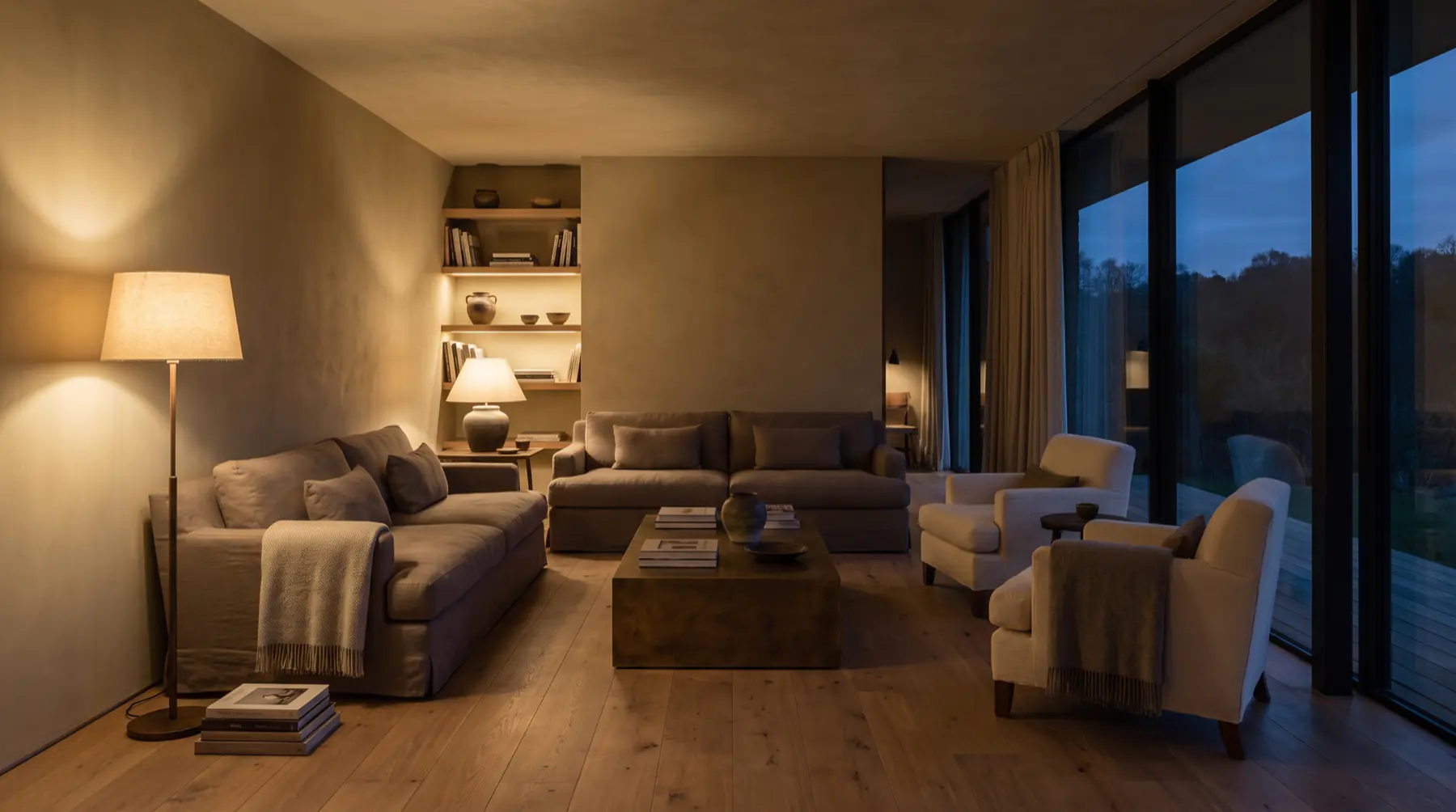
What the work covers
- Lighting and scenes
- Rooms that respond to time, daylight and occupancy — and switches that still behave like switches for anyone who does not want an app.
- Climate by zone
- Per-room sensing so the system responds to the room that is cold, not one thermostat's opinion of the whole house.
- Locks, doors and access
- Entry that can be granted for a window of time and expires on its own, with a record of who came and went.
- Water, temperature and leak sensing
- The failures that cause real damage, caught early and escalated properly.
- Scenes that match real life
- Morning, away, guests, evening, goodnight — composed around the household rather than shipped as defaults.
- Dashboards worth looking at
- Phone, tablet and wall panel views that show the state of the house at a glance.
Denver and the Front Range.
We work across the Front Range and into the mountains — from city homes in Denver to second homes in the Vail Valley and Steamboat. Each of those is a different problem, so each has its own page.
- DenverCherry Creek · Wash Park · Congress Park · Berkeley
- Douglas CountyCastle Rock · Parker · Highlands Ranch · Castle Pines
- Fort Collins & Northern ColoradoLoveland · Windsor · Timnath · Berthoud
- BoulderLouisville · Lafayette · Superior · Niwot
- Evergreen & the FoothillsConifer · Morrison · Idaho Springs · Genesee
- Colorado SpringsMonument · Black Forest · Briargate · Broadmoor
- Summit CountyBreckenridge · Frisco · Dillon · Silverthorne
- Winter Park & the Fraser ValleyFraser · Tabernash · Granby · Grand Lake
- Vail ValleyBeaver Creek · Avon · Edwards · Eagle
- Aspen & the Roaring Fork ValleySnowmass Village · Basalt · Carbondale · Old Snowmass
- Steamboat SpringsStagecoach · Oak Creek · Hayden · Clark
Questions people ask
How much does a smart home cost in Colorado?
It depends almost entirely on scope and on the house itself — an apartment with a dozen devices and a mountain property with outbuildings and freeze protection are not the same project. We scope every home individually after understanding what is already installed and what you want it to do, and the proposal breaks out hardware, design and installation separately so you can see where the money goes.
Do I have to replace the smart devices I already own?
Usually not. Most mainstream lighting, locks, thermostats, sensors and cameras can be brought into one system, and keeping working hardware is cheaper than replacing it. We will say plainly if something is genuinely a dead end — typically kit that only works through a manufacturer's cloud and offers no local control.
Will it still work if the internet goes down?
Yes. The system runs on hardware in your house, so lighting, climate, locks, sensors and automations keep working through an outage. Remote access is the only thing you lose while the line is down, and it comes back on its own.
Do I need to rewire the house?
Rarely. Most of what a modern system needs runs over Thread, Zigbee or Z-Wave, so it can go into an existing home without opening walls. New cable is reserved for the things that genuinely benefit — access points, cameras and the equipment rack.
Tell us what is already in your house.
Bring us the apps that will not talk to each other, the cameras you do not trust, and the routines that almost work. We will design the rest around how you actually live.